Showing posts with label anniversaries. Show all posts

Monday, 30 November 2020

350th Anniversary of the birth of Irish Philosopher, John Toland (1670-1722)

Recalling the Life of Irish Philosopher, John Toland (1670-1722)

– Some Memoirs of the Life and Writings of Mr. John Toland –


Front cover of Some Memoirs of the Life and Writings of Mr. John Toland by Pierre des Maizeaux
John Toland (1670-1722)
The 350th anniversary of the birth of Irish rationalist philosopher, John Toland (1670-1722), which falls today, is being observed with the re-issue of Some Memoirs of the Life and Writings of Mr. John Toland by Pierre des Maizeaux, first published in 1726.

Given the sparsity of biographical information about John Toland, the fact that this account of his life comes from the pen of a contemporary makes it all the more valuable to students of Toland, the early Enlightenment and of philosophy in general. The reader will gain a flavour for the times in which he lived, his character, the impression that he made on those who encountered him (both friends and adversaries) together with some helpful insight into the many polemics and controversies in which he frequently found himself embroiled. "If you would know more of him, search his writings," Toland said of himself and des Maizeaux's account provides every incentive to do just that.

Pierre des Maizeaux was a French Huguenot, living in exile in London at the time of writing. While his original purpose was simply to provide an overview of Toland’s immense literary output, it was "by greatest accident in the world, that I fell into the company of a Gentleman, who had been intimately acquainted with Mr. Toland, and who very generously communicated to me several particulars concerning him."

While John Toland left Ireland in 1698, never to return, following the fallout arising from the publication of Christianity not Mysterious, what we can glean from this short account of his life would suggest that he retained a certain connection to his Irish roots.

In a visit to Prague, in 1708, he met with Irish Franciscans, who gave testimony that "Mr. Toland was descended from an honourable, noble, and most ancient Family" contrary to some of the wilder and more sensational claims made by his detractors (who included Jonathan Swift, also born on this day but three years earlier, in 1667).

In 1719, Toland lobbied against a bill before parliament, "for the better securing the Dependency the Kingdom of Ireland, upon the Crown of Great Britain" arguing that it "shou’d not pass into a Law."

The History of the Druids is mentioned, as a project left unfinished at the time of Toland's death but which, des Maizeaux says, "I believe, he intended to pursue in good earnest", drawing upon his own knowledge of Irish manuscripts, as well as customs and traditions that he would have encountered directly during the first sixteen years of his life, growing up in "in the most northern Peninsula in Ireland … originally called Inis-Eogan, or Inis Eogain, but is now call’d Inisoen, or Enis-owen."

Some Memoirs of the Life and Writings of Mr. John Toland by Pierre des Maizeaux is published by The Manuscript Publisher and available to buy online, in print and e-book editions.

Thursday, 14 November 2019

Gottfried Wilhelm Leibniz (1646-1716): philosopher, mathematician, Google Doodle honouree

Gottfried Wilhelm Leibniz, Bernhard Christoph Francke
Christoph Bernhard Francke
[Public domain],
via Wikimedia Commons
Gottfried Wilhelm Leibniz, philosopher and mathematician, died on this day in 1716.
"... he is often regarded as one of the three great advocates of rationalism. A largely self-taught polymath, his discoveries and contributions to many fields of human scientific enquiry would, in time, have important implications right up to the computer age"Sophia of Hanover – Winter Princess: Gottfried Wilhelm Leibniz (1646-1716)

He was both a contemporary and acquaintance of the Irish-born, rationalist philosopher, John Toland, who whom this web project is dedicated. Leibniz was court librarian at the House of Hanover from 1676 until his death. There, he came under the patronage of the Electress Sophia, who also sponsored Toland. The two men respected each other but, may not always have seen eye to eye for, as author J.N. Duggan (biographer of both Toland and Sophia of Hanover) recounts, Leibniz thought him to be "a man of esprit and is not lacking in erudition, but he pushes things too far" – see John Toland: Ireland's Forgotten Philosopher, Scholar ... and Heretic J.N. Duggan, 2010.

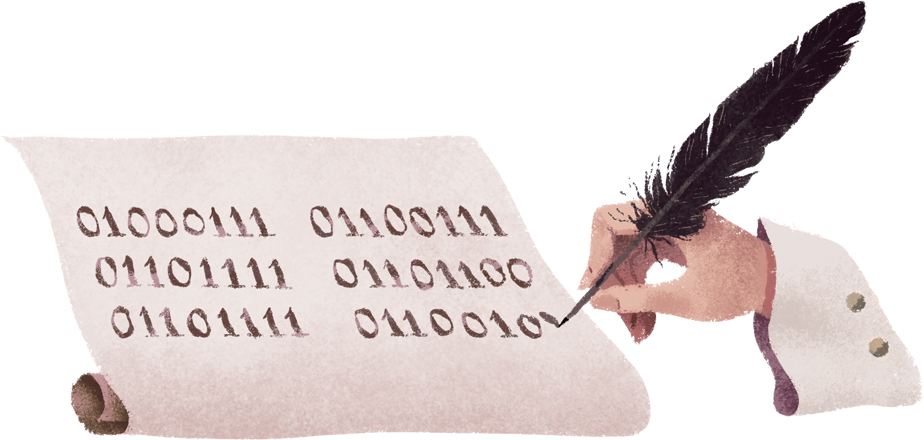
In 2018, Leibniz was an honouree of the prestigious Google Doodle – "the fun, surprising and sometimes spontaneous changes that are made to the Google logo to celebrate holidays, anniversaries and the lives of famous artists, pioneers and scientists" – on the occasion of the 372nd anniversary of his birth.
Google Doodle on the occasion of Gottfried Wilhelm Leibniz's 372nd Birthday

In view of the upcoming centenaries that surround his birth and his death, we ask, would not John Toland (1670-1722) also make a worthy honouree? Have your say by taking part in the poll below.

You can also make your views known directly, by contacting the Google Doodle team. Information about how members of the public can submit ideas for future doodles is available from their dedicated web page.

Saturday, 19 October 2019

John Toland and Jonathan Swift: comparisons and contrasts

Jonathan Swift by Charles Jervas detail
Jonathan Swift (1667-1745)
from a painting by Charles Jervas (c.1675-1739)
[Public domain], via Wikimedia Commons
Jonathan Swift, who died on this day in 1745, was a contemporary and compatriot of John Toland with whom he even shared a birthday (30 November) although, Swift was three years older, being born in 1667. Like Toland, his strongly held views earned him a certain reputation for controversy, polemic, satire. Both men ran the gauntlet of political and ecclesiastical authority in their day, for which they both paid a heavy price in terms of how it affected their respective careers and their livelihoods.

Yet, the similarities that one can't help but notice also betray the contrasts that come to the surface as one digs deeper. For, while both men were deeply involved in the politics and public life of the time, it was usually from opposing platforms that they enunciated their views, often having the effect of engulfing them in controversy of one sort or another.

Indeed Swift was among those who spoke against Toland in the outcry that ensued from the publication of his seminal work, Christianity not Mysterious, in 1695. He was also among those who called into question Toland's parentage, describing him as a "priest and the son of a priest" in a 'Letter to a Member of the House of Commons of Ireland etc. written on September 3rd 1697' (cited in John Toland: Ireland's Forgotten Philosopher, Scholar ... and Heretic by J.N. Duggan)

The price that both men paid included exile although, in opposite directions for, while Toland found himself banished from Ireland, Swift probably felt that he was being banished to the country of his birth, upon finding himself on the wrong side of the fence, politically, in England.

Toland arrived in Dublin sometime prior to the publication of Christianity not Mysterious, after many years studying abroad in Scotland, England, the Netherlands. It is believed that he had hopes of securing a position of some kind in Dublin but, following the furore, it was not even safe for him to remain in Ireland. Thereafter, he spent much of the rest of his life in England (although he was an regular visitor to the Continent), championing and polemicising on behalf of various Whig causes. This, after all, was the political movement of the day to which he had always been closest.

Swift, on the other hand, started out, politically, as a Whig but, eventually crossed over to the Tories. Hence, while Toland largely welcomed the period of Whig supremacy that followed the ascension of Elector George Louis of Hanover to the British throne (as King George I), for Swift, this was the kiss of death in terms of his own political ambitions.
"When he sought a church appointment in England, in reward for his services, the best position his friends could secure for him was that of Dean of St. Patrick's Cathedral in Dublin. It seems that Queen Anne had taken a particular dislike to Swift and, made it clear that he would not have received even that position if she could have prevented it. Among other things, she regarded his work, A Tale of a Tub, to be blasphemous. With the return of the Whigs to power in 1715, Swift left England and returned to Ireland, it is said, "in disappointment, a virtual exile [and] to live like a rat in a hole." – see Writing & Literary on the 350th Anniversary of the Birth of Jonathan Swift (1667-1745)

Jonathan Swift, essayist, poet, political pamphleteer and contemporary of John Toland, died on this day in 1745.

Sunday, 11 March 2018

Introducing a New Website Dedicated To ...

John Toland (1670-1722)
– Irish-born Rationalist Philosopher and Freethinker –

John Toland, Irish-born rationalist philosopher and freethinker, died on this day (11 March) in 1722. "If you would know more of him, search his writings," he wrote in a self-penned epitaph that appeared a few days later.

Toland is best remembered today as a philosopher, freethinker, author, pamphleteer who made important contributions to the various fields of philosophy – in what today would be regarded as both the natural and social sciences.

We choose this day to formally unveil a new website dedicated to Toland, his life and work. This website will serve as a free online resource and repository of knowledge pertaining to his writings, the times in which he lived and to the social movement that he, along with others, spearheaded and represented, with particular reference to the enduring legacy and effect.

There is a lot that has been said about John Toland and probably a lot more that could be said. This website will serve the purpose of ensuring that nothing that should be said will go unsaid. That is why this is a free website, open to anyone who may wish to contribute. Furthermore, we invite those who may wish to contribute to get in touch with us.

The fact that this website is being formally unveiled on the anniversary of Toland's death is not coincidental. In fact, the date has been deliberately chosen. The 350th anniversary of Toland's birth will be observed on 30 November 2020 and the 300th anniversary of his death falls less than two years later, in 2022. We particularly encourage anyone who has an interest in these anniversaries to get in touch with us, to ensure that they are properly observed and accorded the respect that they are due. We will do our best (without fear or favour) to publicise events that are taking place, using networks and channels of communication within our reach.

Further details about this web project will be unveiled in due course. If you are interested, we encourage you to keep in touch – subscribe using the facilities that are available or sign up for e-mail alerts. You can also find us on Facebook and Twitter.

If you would know more, follow us.

Submit a Story

Got some news or an idea for a story that you would like to see covered here? We would love to hear from you. Articles and other material with a view to publication (including press releases) may be conveyed, by e-mail, to the Editor.

Milestones and Anniversaries

Further Reading

  • An Account of the Courts of Prussia and Hanover: Sent to a Minister of State in Holland by John Toland (The Manuscript Publisher, 2013)
  • Letters to Serena by John Toland (Four Courts Press, 2013)
  • Nazerenus by John Toland (Voltaire Foundation, 1999)
  • Physic without Physicians byJohn Toland (The Manuscript Publisher, 2020)
  • Reasons for Naturalizing the Jews in Great Britain and Ireland by John Toland (The Manuscript Publisher, 2013)